Fire does not wait for excellent problems. When an alarm seems, individuals that withstand collaborate the action are wardens and primary wardens, and their training shapes what takes place next. The PUAFER005 course, officially labelled Operate as component of an emergency situation control organisation, provides employees the capability to function as effective wardens. Combined with PUAFER006 Lead an emergency control organisation for chief wardens and replacements, these across the country acknowledged units sit at the heart of a practical emergency situation monitoring structure in Australian workplaces.
I have actually trained wardens in offices, making plants, health centers, institutions, and logistics hubs. The principles stay continuous, yet the application differs with format, passenger account, and danger account. The goal below is to address the inquiries people most often inquire about PUAFER005 and, where appropriate, PUAFER006, while sharing the context that aids you select the right delivery setting, plan for assessment, and obtain your qualification arranged without surprises.
What PUAFER005 covers in real terms
PUAFER005 is about proficiency throughout the initial vital minutes of an emergency situation. That begins with knowing your duty in the Emergency situation Control Organisation, usually called the ECO. The ECO structure prevails throughout Australian workplaces, lined up to AS 3745 Preparation for emergencies in facilities, and it commonly includes a chief warden, deputy principal wardens, communications police officers, and location or flooring wardens. The device focuses on the warden duties rather than the leader function, which is the domain of PUAFER006.
Participants discover how to acknowledge and report emergency situations, raise alarm systems, implement discharge treatments, and help with particular resident needs. The focus is out heroics, it is on constant actions that save time and lower confusion. You learn exactly how to move an area, exactly how to handle stairwells, when to isolate power or plant, and exactly how to communicate with the chief warden plainly under stress. Genuine value originates from drilling these activities till they really feel routine, because actual occurrences feel lead emergency control organization puafer006 anything however routine.
A reoccuring concern develops about tools usage. Wardens are not trained as firefighters. The course covers very first strike fire tools at a recognition level. RTOs might supply fire extinguisher training as an adjunct or a different device. I suggest including a sensible extinguisher part when the center has danger of incipient fires, such as little electrical or kitchen fires, however it ought to never jeopardize the prime duty to increase the alarm and evacuate safely.
Who requires it, and exactly how usually to refresh
Any workplace that runs under AS 3745 need to have an ECO, which ECO needs experienced members. If you are asked to be a fire warden or a deputy, PUAFER005 is the baseline. In higher danger settings, centers often require a lot more comprehensive training or integrate PUAFER005 with site-specific modules that address hazardous chemicals, complicated plant closure, or high passenger loads.
Refreshers issue. People neglect, teams change, and buildings evolve. Most organisations set a refresher cycle of 1 to 2 years for wardens and 1 year for chief wardens. The typical calls for routine training and emergency feedback exercises as opposed to a dealt with duration, however in method, a yearly drill plus an official refresher course every 12 to 24 months maintains abilities present and shows due diligence. After we ran two back-to-back discharges in a high-rise as a result of false alarms, the structure supervisor moved to a yearly refresher course since it honed the ECO's sychronisation and decreased emptying time by almost three minutes floor to assembly.

Duration: how long the PUAFER005 course takes
Expect 3 to 6 hours for PUAFER005, including evaluation. The spread relies on delivery mode, team size, and how much site-specific content is folded in.
Shorter sessions, around half a day, usually fit reduced complexity sites with uncomplicated discharge routes and compliant emergency situation strategies. Longer sessions add richer scenario job, threat identification walk-throughs, and interaction drills. If you are integrating PUAFER005 with extinguisher method, add 45 to 90 minutes to allow risk-free live-fire or simulator use and correct coaching.

PUAFER006, targeted at primary wardens and deputies, usually takes 4 to 7 hours. The added time covers decision-making under unpredictability, liaison with emergency situation services, incident logging, interaction methods, and leadership throughout disturbances like lift faults or blocked egress.
Some RTOs offer combined layouts, where theory is finished online and useful assessment runs onsite. This can shorten the moment far from workstations while preserving hands-on components. Mixed styles work well for multi-site organisations that desire consistency in content but have to customize the useful section to each building.
Cost: what you ought to budget
For public courses, PUAFER005 typically sits in the AUD 120 to 220 array each. Exclusive team bookings range in different ways. Spending plan around AUD 800 to 2,500 for a half-day group session depending upon traveling, team dimension, and customisation. Including extinguisher training or bespoke scenarios bumps prices. The premium for onsite training is commonly warranted by much better transfer of discovering, since the practicals run in the passages, stairwells, and assembly locations your group will use in a real event.
PUAFER006 pricing is normally a little higher offered the added complexity, frequently AUD 150 to 300 for public training courses or proportionally much more for personal sessions. If you see rates far listed below these arrays, ask what is consisted of, just how evaluation occurs, and whether the RTO is correctly signed up to issue the device of competency.
A narrow factor on value: the least expensive option is not constantly less expensive. After an incident, insurance firms and regulatory authorities will certainly seek evidence of a functioning ECO, documents of training, and exercise end results. A company that documents attendance, analysis outcomes, and drill observations will certainly conserve you time if you need to demonstrate compliance.
Entry requirements and sensible adjustments
There are no official academic prerequisites for PUAFER005. Participants need the physical capability to move through a facility and the communication abilities to provide and receive directions under stress and anxiety. That said, sensible modifications can suit many demands. In a distribution center where we had a warden with limited movement, we assigned them to the interactions role and maintained them in the control point during evacuations. They excelled at tracking passenger counts and managing radio website traffic, and we documented the duty allotment to please the performance criteria.
Language, proficiency, and numeracy needs are practical rather than technological. You ought to be able to read signs, translate a layout, and make use of a walkie-talkie or phone succinctly. If English is a second language, an excellent instructor will certainly allow additional time, offer visual motivates, and use simple speech without compromising the evaluation standard.
Assessment: what you will really do
Assessment for PUAFER005 is competency based. It includes an understanding component and a functional presentation. The expertise section normally includes short-answer questions or scenario-based motivates that cover alarm system types, ECO functions, evacuation approaches, communication procedures, and dangers such as smoke spread and stairwell blockage. It should not really feel like a scholastic examination, however it will test whether you can remember and apply the essentials.
The functional component matters extra. Anticipate to carry out a move of an assigned location, record to the chief warden, manage an obstructed departure circumstance, and help a simulated owner with details needs such as mobility or hearing disability. You will certainly utilize boom boxes or a phone tree, operate under time stress, and adapt as the situation advances. The assessor searches for compliance with treatments, tranquil interaction, and correct prioritisation. Individuals sometimes over-focus on accumulating individual equipment prior to beginning a sweep. You learn to leave bags behind, grab a high-visibility warden identifier, and act.
For PUAFER006, the analysis adds control factor control, logging choices, rises, and intermediary with going to fire staffs or safety and security. Prospects lead warden groups, allot tasks, handle contrasting reports, and choose when to start or customize evacuation.
Certification: what you receive and how much time it lasts
On effective completion of PUAFER005, you obtain a Declaration of Achievement for the system PUAFER005 Operate as part of an emergency control organisation from a Registered Training Organisation. This record shows the device code, your name, the RTO code, concern day, and any type of co-delivered systems. The https://alexismkok423.image-perth.org/puafer005-operate-as-part-of-an-eco-real-world-applications-and-study majority of RTOs likewise issue a wallet card or digital badge for convenience, however the Statement of Accomplishment is the official record.
There is no national expiry date connected to the device. Companies and center supervisors establish refresh periods via their emergency preparing procedures. As a rule of thumb, keep your training within the past 2 years for wardens and one year for primary wardens. If your website changes significantly, such as a new fit-out, various tenant mix, or a relocate to a new building, retraining and re-familiarisation should occur no matter dates.
Fire warden needs in the workplace
A working ECO does not occur by mishap. Consultations must be formal, with function descriptions, alternates for absences, and coverage throughout all inhabited areas and shifts. Daytime office towers can lean on volunteer wardens attracted from flooring populaces, while 24-hour facilities such as health centers and information centers should prepare for continuous insurance coverage, consisting of evenings and weekends.
Documentation underpins conformity. Keep an existing list of wardens and primary wardens, layout with areas, setting up locations, and sanctuaries, documents of training and drills, and a routine for exercises. Numerous organisations perform at least two evacuation exercises a year, one full discharge and one desktop or partial exercise, to keep the ECO sharp without over-disrupting operations.
The cultural side issues as much. Wardens require support to implement no-lift plans throughout emptyings, difficulty hazardous behaviors like propping fire doors, and keep clear egress routes. Elderly leaders established the tone by going to drills and recommending the ECO's instructions.
Fire warden training needs and material detail
Good fire warden training is practical and site-aware. Common slides alone do not prepare people for an obstructed stairwell. Training needs to walk through:
- Your alarm system's tones and voice messages, consisting of any type of staged discharge logic. Primary and second egress paths, plus just how to manage compromised routes. Communication devices, such as walkie-talkies, internal phone systems, or public address. Special threats, like laboratories, battery areas, kitchen areas, or oxygen storage. Occupant support demands, including pal systems for mobility, vision, or hearing assistance.
This list is brief for quality here, yet in technique, you will certainly map it to your building and run a situation that compels selections. An unforgettable instance included a high-rise with two scissor staircases. We simulated smoke in one. The warden group had to reverse direction and reroute passengers mid-flow. The chief warden made use of the to advise floorings in stages, avoiding congestion. Afterwards, the structure monitoring readjusted signs and educated an alternate marshalling prepare for that particular failure mode.
Warden identifiers, hats, and the inquiry of colour
People typically inquire about fire warden hat colour and what colour helmet a chief warden needs to use. In Australia, the convention stemmed from AS 3745 is that wardens put on red recognition, commonly a red helmet or cap and a red high-visibility vest. Chief wardens put on white identifiers, such as a white safety helmet or vest. Communications police officers are generally yellow. Replacement primary wardens in some cases utilize white with a red stripe or a tag showing the role. Check your website strategy, due to the fact that some organisations use caps and vests as opposed to tough headgears, especially in office environments.
The factor is visibility and function acknowledgment, not custom. If a fireman shows up in yield equipment, they will look for the chief warden immediately. An ordinary white chief warden hat or vest labeled clearly saves secs. In low-light situations or big crowds, presence strips on vests and door hangers for left areas make life easier.
PUAFER005 versus PUAFER006, and when to take each
If you act as a location or floor warden, PUAFER005 is your course. It prepares you to implement the strategy, support owners, and feed information to the control factor. If you lead the ECO as chief warden or replacement, PUAFER006 is the right system. Many primary wardens complete both: PUAFER005 to internalise the warden point of view, and PUAFER006 to discover management, control, and decision-making under stress. In multi-building sites, chief wardens may likewise obtain additional training on integration with security control areas, building administration systems, and hydrant or lawn sprinkler seclusion protocols, though those subjects rest beyond the official unit outcomes.
Delivery layouts: onsite, public, and blended
Public training courses match individuals from smaller work environments or those replacing a single warden. The advantage is predictable scheduling and lower per-person expense. The void is that practicals take place in a common training area instead of your site.
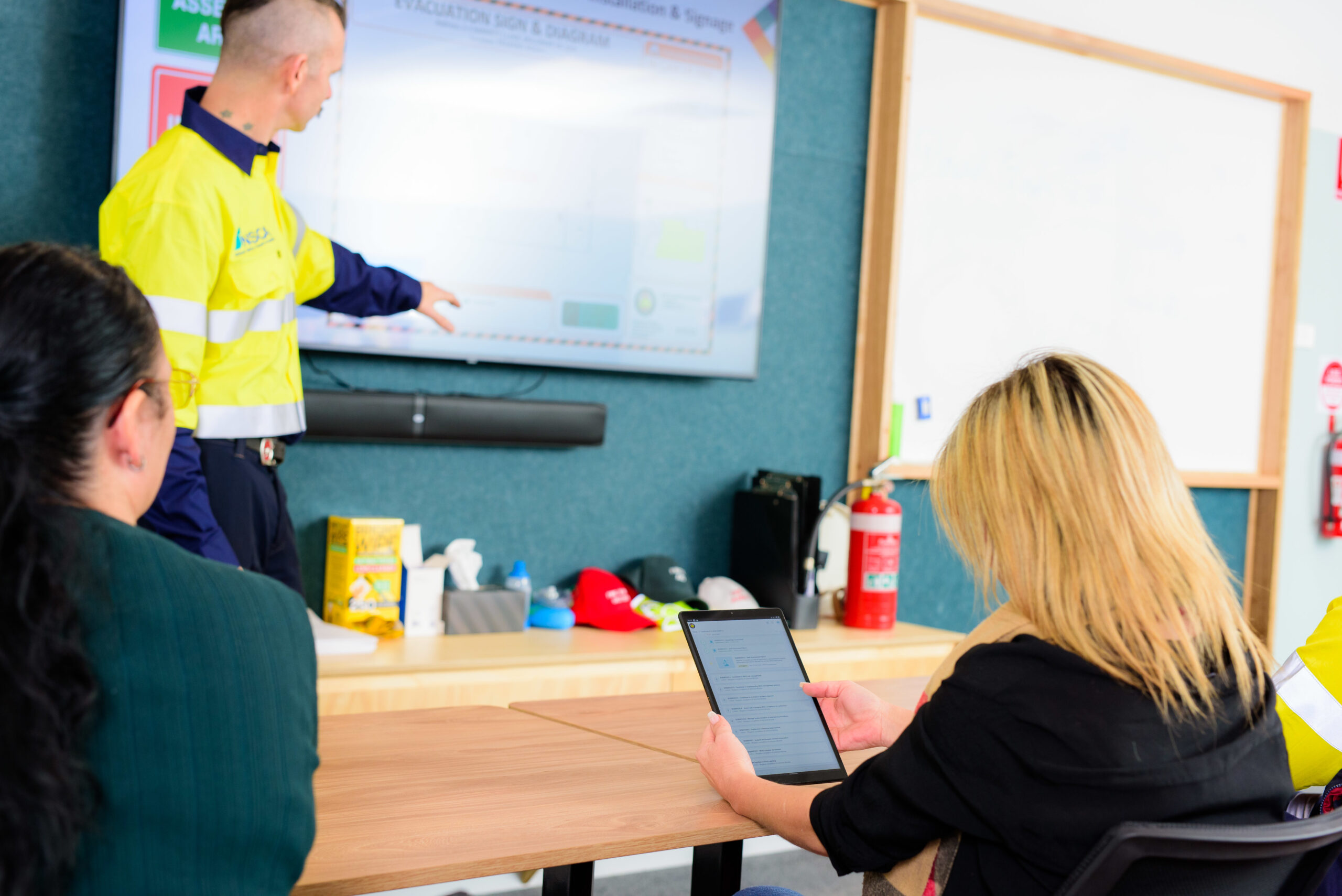
Onsite training courses, supplied by an RTO at your center, provide the very best learning transfer. Wardens practice on your floors, utilize your radios, and stroll your stairwells. The instructor can include your emergency situation plan, your building's alarm system cues, and your assembly points. The ECO reaches interact, which reveals gaps you can repair immediately. The trade-off is the demand to block time for several team and collaborate with occupants if you share space.
Blended styles separate concept from method. Individuals total online components covering interpretations, functions, and basic procedures, then attend a short sensible at the site. This minimizes downtime and maintains the useful concentrated. It functions well once a year for refresher courses, with a complete onsite session every 2nd cycle to bring brand-new team fully right into the fold.
What an excellent useful session really feels like
A skilled trainer will certainly establish a circumstance that really feels slightly uneasy yet risk-free. Radios will certainly snap with incomplete information. A lift switch will be taped off to require stairway usage. Someone will certainly play the role of an overwhelmed site visitor who intends to obtain a bag. The chief warden will certainly need to pick in between waiting for even more details and initiating an organized evacuation. Afterward, there need to be a debrief. That is where the learning lands. We note what functioned, what was slow, and what will certainly change in the strategy. If your practicals do not include debriefs, you are missing half the value.
Common blunders and just how to avoid them
New wardens commonly try to repair troubles solo. The better method is to report early, intensify arising issues, and preserve your own safety and security. Another common mistake is insufficient moves, particularly in shower rooms, storage places, or second meeting rooms. An easy strategy helps: touch each doorframe with the back of your hand when you check within, after that hang a basic door tag that shows the area is clear. Ultimately, communication self-control issues. Usage brief transmissions, confirm crucial messages, and stay clear of chatter. If you are the chief warden, keep a log also if it is harsh. It helps during the event and during the review.
Integrating special dangers and occupants
Every center has traits. A construction plant may require treatment cards for isolating equipment mid-cycle. A medical facility must coordinate with scientific teams to delay or series emptyings based on patient skill. A school might have several setting up factors and lockdown choices relying on the risk. Your PUAFER005 or PUAFER006 course ought to touch these facts, also if they rest somewhat outside the common unit content. The very best instructors invite website representatives to co-facilitate those parts, guaranteeing precision and neighborhood ownership.
Support for residents that require aid should not be ad hoc. Pal systems, refuge factors, discharge sleds for stairwells, and interaction boards or apps for hearing-impaired occupants all call for preparation and method. Throughout one drill in a mixed-use building, we became aware the evacuation sled was saved behind a keypad door that not all wardens might open. We fixed gain access to, added a 2nd sled on the opposite side of the core, and updated duty cards so the nearby warden got it during sweeps.
Records, compliance, and what auditors look for
Keep 3 things in order: existing plans, training records, and workout results. Strategies need to reflect real layouts, with accurate floor numbering, occupant names, and updated setting up areas. Training records should provide that completed which device and when, including PUAFER005 for wardens and PUAFER006 for primary wardens, plus any extinguisher training. Exercise results should record times, concerns, restorative actions, and duties. When a regulator or insurer reviews your setup, clear documents reduce inquiries and reveal that the ECO is not simply a listing of names on a wall surface chart.
Where extinguishers fit, and when to utilize them
First attack fire fighting is a topic that deserves regard. The best default stays alarm system, evacuate, and only after that think about fighting a small, had fire if you are trained and it is risk-free to do so. Extinguisher selection have to match the fire course. For example, do not utilize water on an electrical or flammable fluid fire. Many work environments select to integrate live-fire training with water and foam on controlled pans, and use laser or carbon dioxide simulators for electric fires indoors. Practical extinguisher exploration constructs self-confidence, but it needs to never jeopardize evacuation priorities or send out untrained personnel right into smoke.
The chief warden hat, responsibilities, and training path
Chief wardens bring the concern of sychronisation. Using the white chief warden hat or vest is symbolic, however the responsibilities behind it are concrete: obtain and confirm alarm information, choose discharge extent and timing, inform emergency situation solutions, handle communications to flooring wardens and owners, display progression, and adjust when problems change. PUAFER006 formalises these tasks and provides a structure for decision-making under stress. Chief fire warden duties also consist of post-incident evaluations, strategy updates, and ensuring the ECO stays staffed and educated. Some organisations mark a chief emergency warden with broader remit throughout several threats, not just fire, which still straightens with the device's intent yet broadens the planning horizon.
If you are considering the chief warden duty, full PUAFER005 first if you do not have warden experience, after that PUAFER006. Shadow the present chief warden during drills, and method running desktop computer simulations. A certain chief warden steadies the entire building.
Scheduling, shift insurance coverage, and preserving momentum
Workplaces with turning shifts need to intend ECO insurance coverage across the week, not simply 9 to 5. This can call for additional wardens on night and weekend rosters. In logistics and production, we typically establish a quarterly mini-drill at change handover to validate that is on duty, radios are billed, and assembly location lighting works. Little touches like billing cradles near the control point and laminated quick-cards in warden packages settle throughout real incidents.
How to pick a training provider
Pick an RTO with a performance history in your field. Ask about instructor experience, not simply the certification. Instructors that have run large emptyings or functioned as center managers bring subtlety you will not receive from slides. Ask just how they customize to your strategy, what practicals they run, how they examine interaction skills, and how they document end results. If you need both PUAFER005 and PUAFER006, verify they can supply a combined session for blended functions while still examining each unit effectively. Finally, inspect that they address fire warden requirements in the workplace according to AS 3745, and that they can speak to chief warden responsibilities past the bare minimum.
A short, functional list for obtaining started
- Confirm your ECO framework and function insurance coverage across all floors and shifts. Book PUAFER005 for wardens and PUAFER006 for primary wardens or deputies. Update your emergency situation strategy, floor plans, and call trees before training. Arrange radios, identifiers, and accessibility to regulate factors for the practical. Schedule a follow-up drill within 3 months to bed in abilities and take care of gaps.
Final thoughts from the training floor
Wardens are volunteers in several work environments, but their activities bring expert weight. The PUAFER005 course transforms ready staff right into qualified responders who recognize how to relocate individuals safely. The PUAFER006 course equips leaders to make timely selections and maintain information flowing. Get the structures right: pick ideal duration and shipment, allocate top quality, evaluate truthfully, and keep accreditation via normal refresher courses. The remainder is rep, review, and little improvements that accumulate. When the alarm appears genuine, you will certainly be glad for every minute you invested in preparation.
Take your leadership in workplace safety to the next level with the nationally recognised PUAFER006 Chief Warden Training. Designed for Chief and Deputy Fire Wardens, this face-to-face 3-hour course teaches critical skills: coordinating evacuations, leading a warden team, making decisions under pressure, and liaising with emergency services. Course cost is generally AUD $130 per person for public sessions. Held in multiple locations including Brisbane CBD (Queen Street), North Hobart, Adelaide, and more across Queensland such as Gold Coast, Sunshine Coast, Toowoomba, Cairns, Ipswich, Logan, Chermside, etc.
If you’ve been appointed as a Chief or Deputy Fire Warden at your workplace, the PUAFER006 – Chief Warden Training is designed to give you the confidence and skills to take charge when it matters most. This nationally accredited course goes beyond the basics of emergency response, teaching you how to coordinate evacuations, lead and direct your warden team, make quick decisions under pressure, and effectively communicate with emergency services. Delivered face-to-face in just 3 hours, the training is practical, engaging, and focused on real-world workplace scenarios. You’ll walk away knowing exactly what to do when an emergency unfolds—and you’ll receive your certificate the same day you complete the course. With training available across Australia—including Brisbane CBD (Queen Street), North Hobart, Adelaide, Gold Coast, Sunshine Coast, Toowoomba, Cairns, Ipswich, Logan, Chermside and more—it’s easy to find a location near you. At just $130 per person, this course is an affordable way to make sure your workplace is compliant with safety requirements while also giving you peace of mind that you can step up and lead when it counts.